Commercial Waste Removal in Regents Park

Commercial waste removal in Regents Park needs to be organised, practical and suited to the way business premises actually operate. We collect and clear mixed non-hazardous waste from offices, retail units, hospitality spaces, managed properties and other commercial settings, then route it for the appropriate sorting or disposal pathway. The aim is straightforward: keep your premises usable, reduce clutter and remove unwanted materials with as little interruption as possible.
Our service covers regular and one-off collections, from a small amount of packaging and office clear-out waste to larger loads of furniture, fixtures and general business rubbish. Where items need separating, we can handle mixed contents sensibly and work methodically so usable materials are kept apart from residual waste where possible. If you need a broader overview of the options we provide, the business waste removal page is a useful place to start.
For items that are awkward, bulky or simply no longer needed, a clear collection plan makes the job more manageable. You can prepare a short list of what needs removing, note any access limits and decide whether the load is likely to include furniture, appliances or office equipment. If you are ready to move on, you can request a quotation in plain language and we will take it from there.
What we remove from business premises
Commercial premises generate waste in many forms, and not every load is the same. Offices may need old desks, chairs, filing items, monitors and accumulated packaging taken away, while shops and showrooms often need display fixtures, shelving, stockroom contents or back-of-house waste removed. We can also clear general rubbish that builds up during refits, relocations or periodic tidy-outs, provided the material is suitable for the service and does not require a specialist hazardous route.
Some business owners only need a single collection after a clear-out; others need repeated visits as part of a planned waste routine. In either case, the approach should be simple and proportionate. If you want to compare the main service with other types of clearance work, our waste removal page gives a broader view of the general service, while the specialist pages help if the load is mainly furniture, appliances or household-style contents from mixed-use premises.
When a site includes several different waste streams, it helps to think in terms of what is reusable, recyclable or residual. Paper, cardboard, some metals and other recoverable materials may be treated differently from broken items or contaminated waste. Good organisation at the point of collection can save time later, but you do not need to sort everything into perfect categories before speaking to us. A clear description of the load is usually enough to begin.
Office clearances and workplace clear-outs

Office clearances often involve more than just desks and chairs. There may be computer peripherals, storage units, meeting room furniture, archive material, packaging, broken small items and general debris left after a reorganisation. Our office clearance work is suited to workplaces that need usable floor space back without spending valuable time moving awkward items around internally. The focus is on removing what is no longer required and doing so in an orderly way.
Workplace clear-outs can also arise when a business changes layout, renews equipment or consolidates storage. In those situations, it is helpful to distinguish between items to be removed, items to remain on site and anything that needs a separate specialist route. That distinction keeps the collection efficient and reduces the risk of taking away items that still need to stay in use. It also makes the quotation more accurate when the load has a clear scope.
For teams dealing with records or confidential paperwork, the collection itself is only part of the process. Our confidential shredding service may be relevant where sensitive documents have accumulated and need secure handling rather than ordinary disposal. If the main issue is furniture rather than paper, the right clearance choice is usually simpler than trying to treat every item as a separate job.
Furniture, fixtures and bulky items
Many commercial waste jobs in Regents Park involve bulky furniture or fittings that are too awkward for routine disposal bins. That can include office desks, cupboards, reception seating, shelving, tables and other hard-to-move items. Our furniture clearance service is a practical option when items need to leave the building intact or in mixed condition rather than being dismantled by the customer first. The collection can be planned around lift access, stairways and loading points where needed.
When furniture is mainly worn out or broken, disposal becomes more about volume and material than appearance. Some items may still have components that are suitable for recovery, but the key point is that they need removing cleanly and without leaving the site cluttered. We can also discuss related furniture disposal needs where a less general route makes sense, particularly if the load consists mainly of one category of item rather than a mixed clear-out.
The usefulness of a furniture collection often comes down to timing. A room being reconfigured, a tenancy ending or a business reshaping its working area can all create a short window in which removals need to happen. A concise description of the items, plus any practical access notes, is usually enough to arrange the right service. That keeps the process efficient without forcing you to over-prepare.
Household-style clearances for mixed premises

Some commercial locations also contain household-style contents, especially where flats, managed buildings or mixed-use properties are involved. In those cases, our flat clearance, home clearance and house clearance services may be relevant if the material is more like domestic contents than standard workplace rubbish. This can include general furniture, bags of unwanted items, soft furnishings and accumulated clutter from a residential-style space connected to a business or property portfolio.
Choosing the right route depends on what is actually being removed. A clear-out of a staff room, a rented flat over a shop or a storage-heavy domestic unit will usually be handled differently from an ordinary office rubbish collection. Where the contents are mixed, it helps to identify the main item types so the removal is planned sensibly. That way the work stays proportionate, and you are not paying for a service that is either too narrow or too broad for the load.
If the material includes larger domestic furniture or appliance items, the category of waste matters even more. Sofas, wardrobes, mattresses and white goods may need different handling from loose general rubbish, so it is better to describe them accurately rather than grouping everything together. The more precise the description, the easier it is to match the removal to the load and avoid unnecessary delays.
Specialist waste streams and heavier items
Some clearances require more than general rubbish removal because the items are heavy, awkward or governed by specific handling rules. A business may need a broken fridge moved from a kitchen area, a damaged mattress removed from a managed property or a few large appliances cleared after an upgrade. Our fridge and appliance removal and mattress and sofa disposal pages cover those more specific needs and are worth using when the load is dominated by one type of bulky item.
There are also cases where the waste itself needs a more careful route because it may be classed as hazardous or difficult to process. In those situations, the hazardous waste disposal service is the better fit, rather than a standard commercial clearance. We do not treat every awkward item as hazardous, so it helps to describe the material plainly and avoid over-labeling it. That keeps the enquiry accurate and the service appropriate.
For businesses that generate the same sort of bulky waste repeatedly, it is worth choosing the category that matches the main source of the material. A few appliance units, a stack of mattresses or a set of damaged chairs each call for a slightly different approach. Matching the job to the right service makes the quotation process easier and helps ensure the removal route reflects the items involved.
Planning a collection without unnecessary disruption
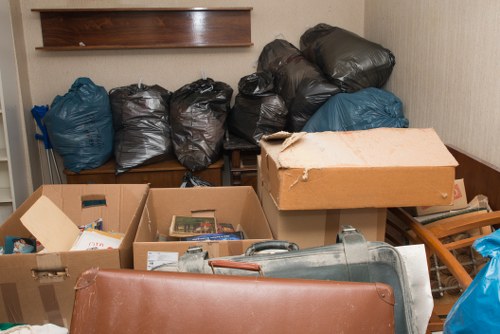
Most customers find it helpful to approach commercial waste removal as a practical planning task rather than a major project. If possible, gather the items in one area, note anything too heavy to move without assistance and tell us whether the load is inside, outside or split between spaces. Those small details can make a meaningful difference to how the collection is organised, especially in premises with narrow access, shared entrances or limited loading space.
You do not need to write a long inventory. A clear description of the main items, the estimated amount and any access limits is usually enough. It can also help to know whether the material includes furniture, electrical items, paper waste or mixed general rubbish. If you are preparing a larger clear-out, our pricing and quotes page may be useful for understanding how quotations are normally shaped around the work involved.
For those who prefer to arrange things online, the book online page offers a direct route to making an enquiry. That said, you can also keep things simple and ask for a quotation in your own words. The important part is that we understand what is being removed and how the site is laid out, so the collection can be planned around the actual job rather than a guess.
How we think about sorting, reuse and disposal
Commercial waste should not all be treated as one undifferentiated pile. Some materials are better suited to recycling or recovery, while others are simply residual waste that needs to be disposed of responsibly. Where items are in good enough condition for a different route, it can be sensible to keep them separate from broken or contaminated material. That practical judgment is part of what makes a waste service genuinely useful to a business.
Our recycling and sustainability page expands on the broader approach to waste handling, and it is helpful if you want to understand how materials are considered after collection. The aim is not to overstate what can be recovered, but to treat the load carefully and avoid unnecessary disposal of items that could be processed another way. This is especially relevant when an office or commercial unit produces a varied mix of materials.
Some items should be kept apart because they are fragile, sealed, sensitive or otherwise not suited to the same route as standard rubbish. A calm, sensible approach works best: identify what needs removing, flag anything unusual and let the collection be shaped around the material. That balance keeps the service practical while still respecting different waste categories.
About Regents Park
Regent’s Park is one of central London’s best-known royal parks, laid out in the early nineteenth century as part of John Nash’s broader Regency vision for the capital. The park sits north of Marylebone and south of Camden Town, and its formal curves, tree-lined avenues and broad open spaces reflect the planned landscape ideas of the period. Much of its character comes from the contrast between carefully composed terraces and softer parkland planting, with the outer circle road and internal routes shaping how visitors move through the space. The park is closely associated with the London Zoo at its northern edge, as well as with the open air theatre, ornamental gardens and boating lake that have long formed part of its identity. Queen Mary’s Gardens are especially noted for their rose collections, while the park’s sports pitches, canalside edges and long perimeter walks give it a variety of uses beyond ornament alone. Nearby streets and terraces add a distinctive architectural setting, including crescents and stucco-fronted buildings that are typical of Nash’s original plan. Regent’s Park also connects to wider London culture through seasonal events, educational institutions and the everyday use of its paths, gardens and sports areas. Its position within the West End and close to several transport links makes it a place that feels both formal and accessible, combining green space, heritage and city life in a single setting.
Clearance work for estates, managed buildings and larger sites

Where commercial waste removal is part of a larger property management need, the job may involve more than a single room or office. Managed buildings, estates and multi-occupancy premises can produce recurring waste from communal areas, service rooms, storerooms and occasional tenant changes. In those cases, it helps to think in terms of the specific area being cleared and the type of material involved, rather than assuming one service suits every part of the site.
For larger internal clear-outs, it is often useful to separate items by broad type: furniture, mixed rubbish, paper, appliances and anything that needs special handling. That rough grouping keeps the work efficient without making the customer do unnecessary sorting. If you need a wider domestic-style clearance alongside the business removal, the loft clearance, garage clearance and garden clearance pages may be relevant where the waste comes from storage areas or external spaces associated with the property.
When you are ready, ask for a quotation with a short description of the items, the access conditions and the kind of space involved. If the load is mixed or unusually bulky, say so in plain terms. We can then help shape a collection that fits the site, the material and the way you need the clearance to happen.