Commercial Waste Removal Regents Park: Recycling and Sustainability Commitment
 Commercial Waste Removal Regents Park focuses on creating an eco-friendly waste disposal area across businesses and contractors operating in and around the Regents Park district. Our approach to sustainable rubbish area management blends practical on-site separation, partnerships with local reuse charities, and a measurable carbon-reduction plan. By aligning commercial rubbish removal Regents Park services with borough recycling schemes and local transfer stations we make it easier for businesses to meet regulatory expectations and elevate the recycling performance of the neighbourhood.
Clear targets and measurable progress
We have set a bold recycling percentage target: a neighbourhood-wide goal of 75% recycling and reuse of commercial waste by 2030. This target is intended to drive reductions in landfill and incineration, and to increase material recovery across office, retail and hospitality premises. To achieve that, we commit to annual public reporting of diversion rates and an internal minimum target of 60% diverted within the first three years. The aim is to transition from generic waste collections to a robust, source-separated commercial collection system—making the sustainable rubbish area for each business both practical and legally compliant.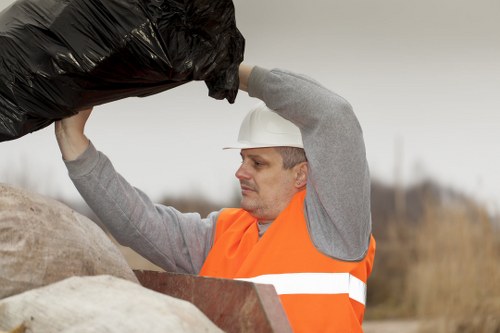
Integration with local transfer stations and borough services
The service links directly with the boroughs' transfer infrastructure. We work with municipal and regional facilities, including local transfer stations in Westminster and neighbouring boroughs and authorised sites such as the North London transfer facilities, ensuring that recyclables collected from businesses in Regents Park are handled correctly. Many nearby boroughs operate dedicated recycling centres and transfer stations that accept separated streams—glass, paper/cardboard, metal, plastics and food waste—so we route collections to the appropriate processing facility rather than a mixed waste stream.Partnerships with charities and reuse organisations
We place a strong emphasis on reuse. Through partnerships with local charities and community reuse organisations—ranging from furniture and appliance charities to clothing and book reuse centres—usable items from office clearances and hospitality refurbishments are diverted to social value outlets rather than being recycled or landfilled. These arrangements support circular economy goals and deliver community benefits by keeping serviceable items in circulation. Typical collaborations include donation chains to registered charities and local social enterprises that perform small repairs and redistribution.
Low-carbon vans, efficient routes and fleet decarbonisation
To reduce emissions from collection we deploy a growing proportion of low-carbon vans: electric vans for inner-city collections, hybrids for mixed routes and low-emission HVO-capable vehicles for heavier loads. Route optimisation software and telematics reduce mileage and idling, while consolidated collection schedules lower the number of journeys through the area. This focus on a greener operational fleet helps commercial waste removal in Regents Park meet local air quality objectives and reduces the carbon footprint of routine rubbish removal.To reinforce the boroughs' approach to waste separation, crews are trained to support businesses with on-site containment best practices: separate containers for dry recycling, food and organic waste, glass, and general residual waste. Source separation increases the quality of recyclable materials delivered to transfer stations and sorting facilities, improves material values and reduces contamination penalties.
Sustainable rubbish area design and commercial behaviour Encouraging a consistent, well-signed and accessible sustainable rubbish area at businesses is essential. We recommend clearly labelled receptacles, colour-coded bins to mirror borough collection schemes, and compacting solutions for cardboard to maximise space in back-of-house areas. Typical recycling and reuse activities in the area include cardboard baling, glass crate returns, segregated food-waste collections for anaerobic digestion, and dedicated textiles and electronic waste reuse lanes.
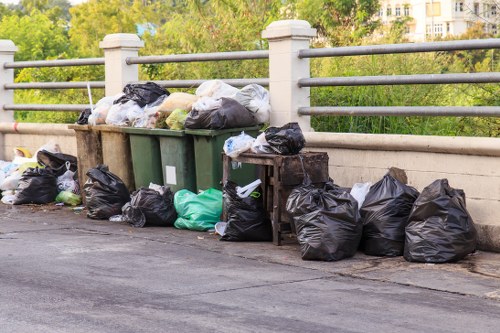 To meet our recycling percentage target and drive continuous improvement we support these practical steps:
- Regular audits of commercial waste streams to identify diversion opportunities
- Formal charity pick-up schedules for reusable items from refurbishments and clear-outs
- Investment in low-emission collection vehicles and route efficiency software
- Cooperation with local transfer stations and regional sorting centres to assure correct processing
 In summary, Regents Park commercial waste removal services are evolving toward a high-performance, eco-friendly waste disposal area model that prioritises recycling, reuse and low-carbon logistics. By working with borough authorities on waste separation policies, leveraging local transfer stations, partnering with charities for reuse and expanding low-emission vans in the fleet, businesses can be confident their rubbish is handled in the most sustainable way possible. Our model of commercial rubbish removal Regents Park is built around measurable targets, collaborative reuse channels and practical operational choices that support the long-term circular economy for the area.