Navigating Local Regulations for Cardboard Disposal
Navigating Local Regulations for Cardboard Disposal: The Complete, Human-Friendly Guide
Cardboard piles up faster than we expect. One delivery becomes three, then ten, and suddenly you've got a leaning tower of boxes by the back door, smelling faintly of ink and rain. Getting rid of it should be simple, right? But navigating local regulations for cardboard disposal can feel like a maze--different councils, different rules, business vs. household requirements, time-banded collections, contamination warnings, and those awkward fines no one wants to pay. Truth be told, a little clarity goes a long way.
This long-form guide cuts through the noise with practical steps, real UK compliance detail, and friendly advice from people who've flattened more boxes than they care to admit. Whether you're a facilities manager in London, an independent retailer in Manchester, a cafe owner in Cardiff, or just trying to do right by your local rules at home--you'll find what you need here. Clean, clear, calm. That's the goal.
Table of Contents
- Why This Topic Matters
- Key Benefits
- Step-by-Step Guidance
- Expert Tips
- Common Mistakes to Avoid
- Case Study or Real-World Example
- Tools, Resources & Recommendations
- Law, Compliance or Industry Standards (UK-focused)
- Checklist
- Conclusion with CTA
- FAQ
Why This Topic Matters
Cardboard is the backbone of modern logistics--it's everywhere. The UK generates millions of tonnes of paper and cardboard packaging each year, much of it recyclable. Yet the rules for how to present, separate, and store cardboard vary by council and by business category. Getting it wrong can lead to overfilled bins, contamination, rejected loads, unexpected costs, and, yes, fines. Getting it right? That means smoother operations, lower waste bills, better sustainability metrics, and happier neighbours.
In the UK, councils set household collection rules, while businesses operate under Duty of Care and a patchwork of national regulations. If you run a business, you must ensure cardboard is handled by a registered carrier, documented with Waste Transfer Notes, and stored safely. If you're a resident, your council's guidance may specify box sizes, flattening rules, collection days, and what counts as contamination (greasy pizza boxes are almost always out).
Quick human moment: we once helped a small shop on a windy Thursday afternoon in Bristol. Boxes were skittering down the lane like kites. After a simple change--flatten, stack, tie with biodegradable twine, and keep dry--the shop saved space, avoided complaints, and the collection team actually left a note saying "thanks." Little changes. Big difference.
Key Benefits
When you're proactively navigating local regulations for cardboard disposal, you unlock a cascade of benefits. It's not just about compliance--it's about control.
- Cost reduction: Separate cardboard, compact it, and you can often downsize general waste bins. Some sites earn rebates for clean, baled OCC (old corrugated cardboard).
- Regulatory confidence: Following local council rules and UK law reduces risk of fines or rejected loads. You'll sleep better, to be fair.
- Operational efficiency: A clear process means less clutter, fewer blocked fire exits, and nicer back-of-house areas that don't smell damp and papery.
- Environmental impact: Recycling cardboard saves trees and energy, and it's one of the easiest wins for a credible sustainability story.
- Brand trust: Customers notice tidy storefronts and clear recycling stations. It signals care. It signals standards.
- Data-driven improvements: Track cardboard tonnage and contamination; you can optimise packaging, negotiate better rates, and set realistic ESG targets.
Ever tried clearing a room and found yourself keeping everything "just in case"? Businesses do that with waste systems. Streamline the cardboard flow and the whole place feels lighter.
Step-by-Step Guidance
Navigating local regulations for cardboard disposal becomes straightforward when you take it step by step. Here's a practical, UK-focused pathway used by waste pros.
-
Identify your waste type and codes.
Most business cardboard falls under EWC code 15 01 01 (paper and cardboard packaging). It's non-hazardous but can be rejected if contaminated (food residues, oils, excessive plastic). Knowing the code helps on Waste Transfer Notes and during audits.
-
Check your local council's specific rules (households) or your service provider's specs (businesses).
Households: Councils typically require boxes to be flattened, sometimes tied, and placed in the correct container or beside it. Time-banded areas (central London hotspots) restrict when waste can be presented.
Businesses: Your contract will specify container types (1100L bin, wheeled cages), accepted materials, capacity limits, and contamination thresholds. Ask for a material specification sheet to avoid surprises.
-
Choose the right containers and layout.
For small sites, a dedicated 240-660L bin for cardboard may be enough. Medium to large sites benefit from vertical balers or compactors depending on volume. Keep containers under cover to prevent soggy, heavy cardboard. Moisture equals weight, and weight equals cost.
-
Train your team.
Set a 60-second huddle: flatten boxes, remove large plastic wrap or polystyrene, keep it dry, no food contamination. Add simple signage at the point of disposal. Honestly, a laminated sign saves arguments later.
-
Set a routine and schedule.
Agree on daily flattening times (end of shift works) and a safe storage stack. In time-banded areas, set phone reminders to place waste out only within the permitted window. One missed collection can snowball into a mess.
-
Verify your waste carrier and paperwork (businesses).
Use a registered waste carrier. Keep Waste Transfer Notes (WTNs) for at least two years, including the EWC code, description, SIC code, and signatures. If audited, these records show your Duty of Care isn't just words.
-
Consider compaction and baling.
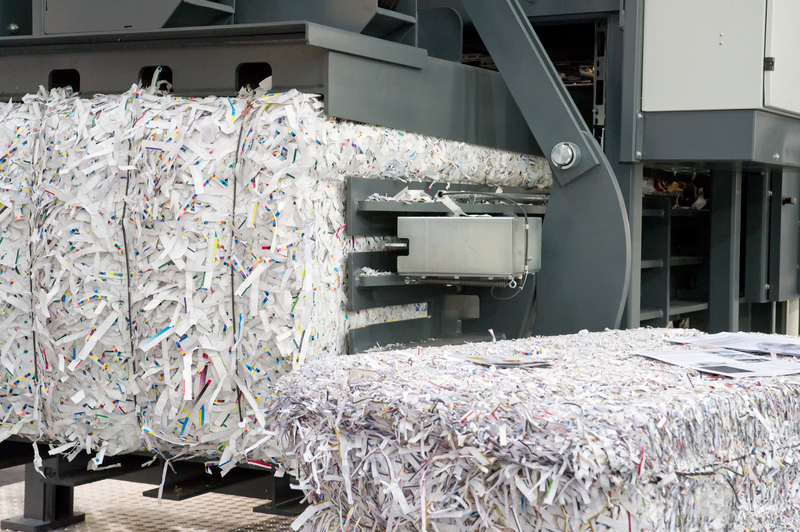
If you generate more than 1-2 bins per week, a small baler can pay for itself. Bales should be tied securely; most buyers specify bale size, contamination levels, and moisture limits. Check training and safety (guards, lockouts) to avoid injuries.
-
Measure and optimise.
Track tonnages on WTNs or collection reports. Compare monthly volumes to sales, deliveries, and seasonality (yes, December e-commerce spikes are real). Use the data to right-size bins, set collection frequency, and negotiate rates.
-
Communicate and iterate.
Share results with your team--"We reduced general waste by 30% and avoided two extra lifts last month." People feel proud when the back-of-house looks tidy and the numbers confirm it.
One rainy morning in Leeds, we moved a bin 3 metres under a canopy. That was it. Contamination dropped, and cardboard rebates improved because loads stayed dry. Tiny tweak, huge payoff.
Expert Tips
- Keep it dry: Cardboard that's wetter than a British autumn loses structural integrity and value. Install a simple awning or use lidded containers.
- Flatten at source: Don't wait. Flattening immediately reduces trip hazards and keeps fire exits clear. Your future self will thank you.
- Know what's "clean": A bit of tape and labels is fine. Food contamination is not. Greasy pizza boxes? Usually out--check your council; some accept clean portions torn away.
- Signage and micro-training: One minute at induction, plus a clear poster with do/don't icons, solves 80% of contamination issues.
- Optimise collections: If your bin is half-full on collection day, decrease frequency. If it's overflowing, increase capacity rather than paying for excess charges.
- Safety first with balers: Follow manufacturer instructions, use PPE for banding, and lockout/tagout for maintenance. No shortcuts--ever.
- Watch the market: OCC rebate rates fluctuate. Clean, well-stacked bales get better prices when markets are up.
- Seasonality planning: Q4 retail spikes need extra capacity. Book additional lifts early to avoid missed collections in the rush.
- Local council nuance: Westminster vs. Hackney, Cardiff vs. Swansea--subtle rules differ. The quickest compliance win? Read the local page once and screenshot it for your team.
- Bundle soft plastics separately: Never tuck void-fill film into cardboard bales. It's a top reason for rejections.
Yeah, we've all been there--lifting a soggy box that disintegrates like a Weetabix. Keep it dry and life's easier.
Common Mistakes to Avoid
- Putting food-soiled cardboard in with clean loads: A single greasy pizza box can contaminate a whole batch. When in doubt, tear off the greasy bit.
- Missing time-banded windows: In city centres, waste must be presented only at certain times. Miss it, and you might face a penalty or your waste simply won't be collected.
- Overflow and side waste: Councils and contractors often won't take cardboard left beside bins unless arranged. Plan capacity so you're not playing Tetris on the pavement.
- No paperwork for businesses: Not keeping Waste Transfer Notes for two years is a classic compliance pitfall. Audits do happen.
- Wrong carrier: Using an unregistered carrier risks prosecutions. Always verify licences.
- Unsafe storage: Stacking cardboard too high or blocking exits is both a fire risk and an H&S breach. Fire marshals notice. Quickly.
- Ignoring moisture: Rain adds weight and ruins quality. A simple tarp or lidded bin saves money and hassle.
- Mixing confidential paper: Don't put sensitive documents in cardboard recycling. Use a shred console or confidential waste service.
- Forgetting to flatten: Unflattened boxes gobble bin space and lead to overflow charges. Flatten on arrival; it becomes second nature.
- Assuming household rules apply to businesses: Different world. Businesses have a legal Duty of Care and must use commercial services.
One client kept every large appliance box "just in case." Weeks later, they had a flammable maze behind the store. We cleared it, introduced a baler, and the team laughed about how much brighter the place felt.
Case Study or Real-World Example
Location: Central London, mixed retail street with time-banded collections
Scenario: An independent homeware shop was getting warnings from the council: cardboard placed out too early and occasional contamination (e.g., plastic air pillows shoved into boxes).
What we did:
- Conducted a quick waste walk at 8:30am--delivery rush, back door cluttered, three staff trying to unpack while customers peered in.
- Introduced a simple flatten-then-stack protocol with a cheap, wall-mounted cutter and signage.
- Moved the cardboard staging area 2 metres under a canopy, kept twine beside it, and placed a small lidded bin for soft plastics.
- Set phone alarms for time-banded windows (11:00-12:00 and 19:00-20:00). Two reminders--no excuses.
- Switched from ad-hoc collections to a weekly scheduled pickup with a registered carrier, with WTNs archived in a shared folder.
Results in 6 weeks:
- Zero council warnings. Zero. Peace of mind returned.
- Back-of-house space increased by ~25%--staff moved freely; fewer trip hazards.
- General waste lifts reduced from three to two per week; cost saving of ~18% on monthly bills.
- Staff satisfaction improved--one even said, "It just smells less damp." You could almost smell the cardboard dust before; now, not so much.
It was raining hard outside that day we made the change. To be fair, that's London. But under a canopy, the cardboard stayed crisp, the pavement stayed tidy, and fines stayed away.
Tools, Resources & Recommendations
When you're navigating local regulations for cardboard disposal, a few well-chosen tools make it easier--and safer.
- Local council pages: Look up your council's recycling guidance for cardboard. Screenshot the page for quick team reference.
- GOV.UK guidance: Environmental Protection Act 1990 (Duty of Care), Waste (England and Wales) Regulations 2011, Waste Duty of Care Code of Practice. Reliable and audit-proof.
- EA/SEPA/NRW public registers: Verify your waste carrier's licence. It takes two minutes and avoids legal headaches.
- WRAP resources: Best-practice guides on recycling, contamination control, and packaging improvements.
- Recycle Now (household-focused): Simple, practical advice on what can and can't go in your recycling.
- Market trackers (e.g., Letsrecycle): Check OCC prices if you produce baled volumes; it informs contract negotiations.
- Balers and compactors: Choose CE-marked equipment with proper guarding. For small shops, a vertical baler is often enough; for warehouses, consider a mill-size baler.
- Safety kits: Gloves, safety knives, baling wire tools, and training guides. It's not glamorous, but it's vital.
- Signage packs: Do/Don't visuals, moisture warnings, and time-band reminders. Keep them near the point of use.
Pro tip: keep a tiny "contamination jar" in the back--drop in a coin for every mistake (plastic bag in cardboard, etc.). Once a month, buy biscuits for the team. A bit silly, but it works.
Law, Compliance or Industry Standards (UK-focused if applicable)
Here's the backbone of UK rules that matter when you're dealing with cardboard waste. This isn't legal advice, but it is practical, experience-based guidance used daily by compliance teams.
- Environmental Protection Act 1990 (Section 34): Duty of Care
- Businesses must take all reasonable steps to prevent illegal waste management. That means using registered carriers, describing waste accurately, and keeping transfer notes.
- Households follow council rules; businesses require commercial contracts--household services don't cover trade waste.
- Waste (England and Wales) Regulations 2011
- Apply the Waste Hierarchy: prevent, reduce, reuse, recycle, recover, dispose.
- Separate collection of paper/cardboard, metal, plastic, and glass should be in place where Technically, Environmentally, and Economically Practicable (TEEP).
- Waste Duty of Care Code of Practice (2016)
- Details the practical expectations for carriers, brokers, and producers. Keep WTNs for at least two years.
- Producer Responsibility: Packaging Waste Regulations 2007 (and amendments)
- Certain businesses must register and meet recovery/recycling obligations via PRNs/PERNs. Extended Producer Responsibility (EPR) for packaging is being phased in--check current GOV.UK timelines for fees and reporting.
- Scotland: Waste (Scotland) Regulations 2012
- Businesses must present key recyclables separately (including paper/cardboard). Duty of Care is enforced by SEPA.
- Wales: Workplace Recycling Regulations (2024)
- Require businesses to separate recyclables including paper and cardboard for collection. Robust enforcement supports Wales' high recycling rates.
- Northern Ireland: Waste Regulations (NI) 2011
- Similar principles--separate collection and Duty of Care. Managed by NIEA.
- Health & Safety
- Follow HSE guidance on balers, compactors, manual handling, and safe stacking. Lockout/tagout for maintenance; never bypass guards.
- Fire safety: Refer to NFCC and WISH guidance for waste and recycling sites. Keep clearances, avoid excessive stockpiling, and manage ignition sources.
Documentation to hold on-site (businesses):
- Waste Transfer Notes (or annual season tickets) for cardboard collections--retain for two years.
- Carrier registration numbers and permits for your contractor.
- Site plans for storage areas and fire risk assessments if volumes are significant.
- Equipment manuals, maintenance logs, and staff training records for balers/compactors.
Final note: Local councils can issue Section 47 notices (EPA 1990) to businesses specifying how and when to present waste. Ignore them and you risk Fixed Penalty Notices. It's avoidable--stay ahead by reading and following the notice.
Checklist
Print this, stick it on the wall, and you'll feel 90% more in control tomorrow morning.
- Waste ID: EWC 15 01 01 for cardboard packaging; confirm accepted materials with contractor.
- Local rules: Screenshot council guidance and time-bands; share with team.
- Containers: Right size, under cover, labelled clearly; no overflow.
- Process: Flatten immediately; keep dry; separate plastics and polystyrene.
- Paperwork: Registered carrier, WTNs kept for two years, contracts on file.
- Training: 60-second induction and signage; refresh monthly.
- Safety: Clear fire exits, safe stacking, baler training, PPE available.
- Scheduling: Collections aligned to volume and time-bands; reminders set.
- Monitoring: Track tonnage, contamination, and costs monthly; adjust as needed.
- Contingency: Rain plan, holiday peaks plan, backup collection slot.
Ever packed up after a busy Saturday and thought, "Where did all these boxes come from?" Happens to the best of us. With this checklist, Monday won't feel so chaotic.
Conclusion with CTA
Navigating local regulations for cardboard disposal doesn't have to be complicated--or stressful. With a clear process, a touch of training, and the right containers, you'll recycle more, pay less, and keep your site looking sharp. You'll also protect your business from unnecessary risks, and that confidence shows up everywhere--from cleaner storefronts to smoother audits.
Set the basics, then build: flatten, keep dry, separate carefully, document properly, and communicate the plan. It's simple, but it's powerful.
Get a free quote today and see how much you can save.
Take a breath. You've got this--one neatly flattened box at a time.
FAQ
What counts as "cardboard" for recycling?
Typically corrugated boxes, paperboard cartons, and brown kraft packaging. Tape and labels are fine in small amounts. Food-soiled or wet cardboard may be rejected, so keep it clean and dry.
Do I need to remove all tape and labels?
No. Most facilities handle small amounts of tape and labels. Remove large plastic film, polystyrene inserts, and heavy staples when you can--it improves quality and reduces rejections.
Are greasy pizza boxes recyclable?
Usually no--grease contaminates fibres. Some councils allow you to tear off clean, non-greasy sections and recycle those. Check your local guidance to be sure.
What is the EWC code for cardboard packaging?
For business waste, use EWC code 15 01 01 (paper and cardboard packaging). Include it on Waste Transfer Notes along with a clear description.
How long must businesses keep Waste Transfer Notes?
At least two years in the UK for non-hazardous waste like cardboard. Keep digital copies in a shared folder for easy audits.
Can businesses use household recycling collections?
No. Businesses need a commercial waste contract and must use a registered waste carrier. Household services are not permitted for trade waste.
Do I need to bale cardboard to be compliant?
No, baling isn't required for compliance, but it can reduce volume and costs if you produce moderate to high quantities. If you bale, follow safety guidelines and buyer specs.
How do time-banded collections work?
Some councils, especially in busy areas, set specific windows when waste can be presented. Presenting waste outside those times risks fines or missed collections. Set reminders to stay compliant.
What's the biggest cause of rejected loads?
Contamination--usually food residues, mixed plastics in bales, or wet cardboard. Keep cardboard under cover, separate materials, and add simple team signage.
Can I get paid for cardboard?
Potentially, yes. Clean, baled OCC can attract a rebate depending on market conditions and volume. Smaller sites usually benefit through reduced general waste costs rather than direct rebates.
Do the rules differ in Scotland, Wales, and Northern Ireland?
Yes, the core Duty of Care is UK-wide, but separate collection requirements and enforcement vary slightly. Scotland mandates separate collection; Wales' Workplace Recycling Regulations (2024) require separation; NI follows similar principles via NIEA.
What if it rains on collection day?
Keep cardboard sheltered until just before the collection window, use lidded bins, and avoid placing loose cardboard on wet pavements. Moisture increases weight and reduces quality, so a canopy or tarp really helps.
How often should I schedule collections?
Match frequency to volume. If bins overflow, increase container size or add a lift; if bins are half-empty, reduce frequency. Review monthly and adjust seasonally.
Is shredding cardboard a good idea?
Sometimes. Shredded cardboard makes excellent packaging void-fill but can cause mess and attract moisture. If you do it, store it in sealed bags or containers and avoid mixing with recyclables.
What about confidential paper mixing with cardboard?
Keep confidential documents separate. Use a secure shredding service; don't throw sensitive paper into cardboard recycling--it's a compliance and data protection risk.
How do I verify a waste carrier?
Use the public registers for the Environment Agency (England), SEPA (Scotland), NRW (Wales), or NIEA (Northern Ireland). Check the registration number and keep a record.
Do I need special signage?
Not legally, but it's best practice. Clear "Cardboard Only--Keep Dry--Flatten" signage near disposal points reduces mistakes and speeds up training.
What's the best way to store cardboard before pickup?
Flatten immediately, stack neatly under cover, and avoid blocking exits. For high volumes, use a baler; tie bales securely and follow fire safety spacing guidelines.
Can I mix paper and cardboard?
Sometimes yes, depending on your council or contractor's specification. However, separate collection for paper/cardboard may be required under TEEP or local regulations. Always check your service specs.
What if my load was rejected?
Ask for the reason and photos. Fix contamination issues, train staff, and review your storage setup. A quick root-cause check--often moisture or mixed plastics--usually prevents repeats.